When it comes to dental treatment abroad, the question about safety is the first every patient should ask and the last that many agencies answer with facts. In this article we describe the concrete protocols our Tirana clinics apply every day: how instruments are sterilised, what is single use, how the rooms are organised, how implants and materials are traced, how emergencies are managed and how your data are protected. These are not promises, they are procedures you can see for yourself on your first day at the clinic.
How are instruments sterilised?
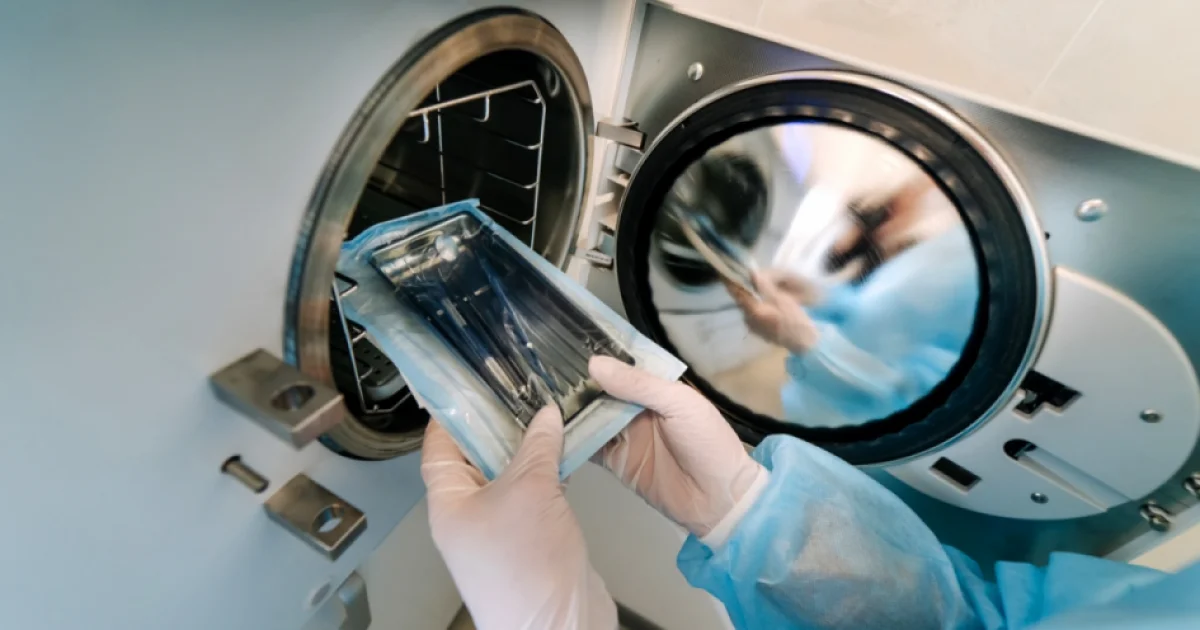
Every reusable instrument follows a multi stage cycle: decontamination in an ultrasonic bath with enzymatic solution, washing in a thermal disinfector, drying, individual pouching and sterilisation in a class B autoclave, the same class required for surgical instruments in European hospitals. Every cycle is recorded with date, number and parameters, and effectiveness is checked periodically with chemical and biological indicators. Sterile pouches are opened in front of the patient, at the moment of use. Autoclaves and washing systems are European made and undergo scheduled maintenance.
What is single use?
Everything that can be: gloves, masks, suction tips, cups, syringes, needles, scalpel blades, surgical drills, surface and handle covers, drapes and gowns for surgery. Single use material is disposed of according to healthcare waste regulations. Room surfaces are disinfected between patients with certified products, and the air in surgical rooms is filtered.
How are the rooms organised?
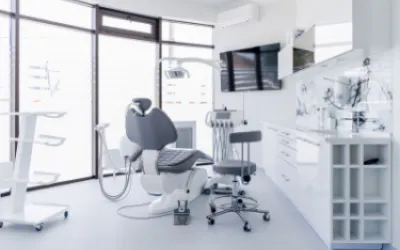
Operating rooms for implant and regenerative surgery are separate from restorative and prosthetic treatment rooms, with access limited to staff in surgical attire. Sterilisation has its own room with a one way route from dirty to clean, to avoid any cross contamination. Treatment rooms are fitted with equipment from German, Italian, Japanese and American manufacturers with documented maintenance.
How are implants and materials traced?
Every implant placed is recorded with the name of the system, the diameter, the length and the batch number, and the patient receives the implant passport. Zirconia, graft materials, membranes and the other main materials are CE certified and their batches are recorded in the clinical record. In the event of a batch recall by a manufacturer we are able to identify the patients involved, as required by European regulations on medical devices.
How is the patient's general health assessed?
Before every surgical treatment we take a complete medical history: illnesses, medicines, allergies, habits such as smoking, and we ask for recent blood tests when necessary. Some conditions, such as uncontrolled diabetes or therapy with anticoagulants and bisphosphonates, require particular precautions or a discussion with the treating doctor at home. Our doctor talks about this openly during the free consultation, and if a treatment is not safe for you they tell you so, even if it means not going ahead.
How are emergencies managed?
The rooms are equipped with medical emergency kits, oxygen and a defibrillator, and the staff are trained in first aid and basic life support with periodic refreshers. For procedures under sedation an anaesthetist is present. The clinics are in Tirana, a few minutes from the capital's hospitals, and work with them for any need. After you return home the doctor remains reachable on WhatsApp and by video call for any unexpected symptom.
How are data and privacy protected?
Radiographs, photos, clinical record and documents are kept in protected systems, according to the European data protection rules we apply to all patients. Case photos are used for communication only with the patient's written consent, and the names of the clinics and doctors are communicated to the patient during the consultation, not published on a website. The patient receives a copy of their own documentation and can share it with their trusted dentist.
Who checks that all this is done?
The clinics are licensed by the Albanian health authorities and subject to their inspections, and voluntarily apply European guidelines on infection control in dentistry. But the most effective check is the one we carry out ourselves every day, because we work inside the clinics and every problem would come back to us. We have no intermediaries to pass responsibility on to.
How are water and air quality controlled?
The dental units are fitted with disinfection systems for the water circuits, with continuous treatment of the water reaching the rotary instruments and syringes, and the circuits are flushed between patients. Surgical rooms have filtered air exchange and are sanitised with specific protocols between procedures. These are details invisible to the patient, but they make the difference in preventing infections.
How are staff trained and updated?
Sterilisation staff, assistants and hygienists receive initial training on infection control protocols and periodic refreshers, with internal checks on the application of procedures. The doctors attend international courses and congresses and share complex cases and any complications in internal meetings, because safety is also built by learning from mistakes and not hiding them.
What can the patient do for their own safety?
Communicate precisely their medical history, medicines and allergies, even those that seem irrelevant; bring recent blood tests when requested; follow the pre and post operative instructions; not smoke in the days around surgery; and never hesitate to ask questions. An informed patient is a safer patient, which is why every explanation is given in your language and in writing.
Why is safety the first thing we talk about?
Because without safety no aesthetic result has any value. A new smile obtained with untraceable materials or in non sterile environments is a risk, not a success. Everything else, from technology to the laboratory, from the doctors to support after returning home, is built on this foundation.
Can I see all this in person?
Yes. On your first day in Tirana we are glad to show you the sterilisation room, the cycle records, the surgical rooms and the laboratory. Safety is not a marketing topic, it is the condition for working well, and it is right that the patient can verify it. If you want to discuss it before leaving, the consultation with our doctor is free and without obligation.