When a patient asks us whether the same materials as in Italy are used in Tirana, the answer is simple: yes, and we can prove it with the documentation delivered together with the treatment plan. The market for dental materials and equipment is global, and German, Italian, Japanese and American manufacturers sell the same products throughout Europe. In this article we explain what goes into our patients' mouths and which instruments our doctors work with, because the quality of a treatment also depends on this.
Which dental implants do we use?
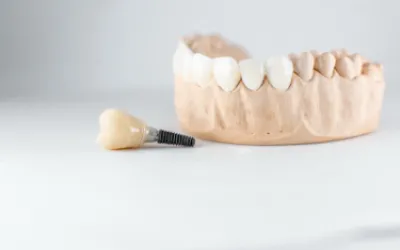
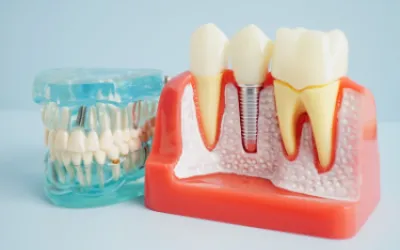
Implants are medical grade titanium screws that replace the root of the tooth. In our Tirana clinics we use exclusively implant systems from internationally recognised brands, with a treated surface that promotes osseointegration, a precise internal connection and a complete range of prosthetic components. The choice of brand is not a detail: it means being able to rely on published clinical research, on spare components available worldwide and on the possibility, for any dentist in Italy or elsewhere, of working on the same implant in the future. The name of the implant system and the batch number are written in the treatment plan and handed to the patient with the implant passport.
Which zirconia do we choose for crowns and bridges?
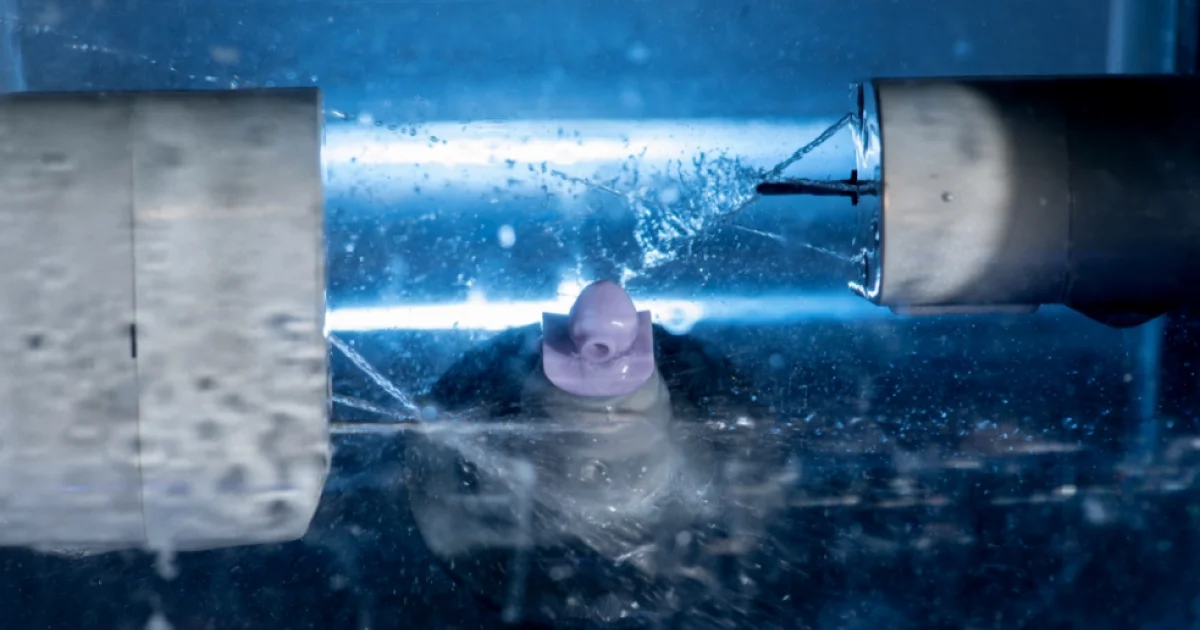
Zirconia, or zirconium oxide, is the high strength ceramic with which we make crowns, bridges and complete prostheses on implants. Not all zirconia is the same: there are more opaque and stronger materials, indicated for molars and support structures, and more translucent multilayer materials, indicated for the front teeth where aesthetics matter. In the own laboratory we work with CE certified zirconia discs from German and Japanese manufacturers, choosing for each case the most suitable class of material. Veneering ceramics, composites and adhesive cements come from the same major European, Japanese and American producers used in Italian clinics.
Where does the diagnostic equipment come from?
Diagnosis in our clinics is digital. The cone beam CT scanner, which shows bone, nerves and sinuses in three dimensions with a reduced radiation dose, and the digital radiography systems come from leading German, Italian and Japanese manufacturers. The intraoral scanners, which replace impression pastes with a three dimensional scan in a few minutes, come from European and American manufacturers. These instruments are not only more comfortable for the patient: they allow the surgeon to plan the procedure on the computer and the laboratory to design the prosthesis on precise data.
How does guided surgery work?
With the data from the CT scan and the intraoral scan the surgeon virtually positions the implants in the ideal location, respecting the anatomical structures and the prosthesis that will be made. The software generates a surgical guide, printed in 3D, that directs the drill exactly into the planned position, angle and depth. The result is a shorter, less invasive and more predictable procedure, with the possibility in many cases of delivering a fixed provisional prosthesis within a few days. The software and printers we use are the same adopted in European implant centres.
What does the own laboratory do with CAD/CAM technology?
In the laboratory inside our Tirana clinics the technicians design crowns, bridges, veneers and complete prostheses on the computer and mill them from blocks of zirconia or ceramic with German made numerically controlled milling machines. The fully digital workflow, from scan to milling, removes the manual steps that introduce inaccuracies, guarantees margins that fit the tooth precisely and makes it possible to try, correct and deliver the prosthesis during the same stay. The ceramist finishes and characterises every piece by hand to obtain natural colour and translucency.
How is sterilisation guaranteed?
The class B autoclaves, washing systems and sealers in our clinics are European made and every sterilisation cycle is recorded and verified with chemical and biological indicators. Everything that can be single use is. The surgical room for implantology is separate from the restorative treatment rooms. These are the same protocols required by European guidelines, and we are happy to show them to patients on their first day at the clinic.
Why is the origin of the materials written in the treatment plan?
Because the patient has the right to know what is being put in their mouth and to be able to prove it in the future to any other doctor. The treatment plan we deliver after the free consultation states the implant system, the type of zirconia and the main materials, and the written warranty is delivered together with the plan. Traceability and transparency are the basis of trust, and they are also the best way to compare our proposal honestly with that of an Italian clinic.
What changes for the patient with digital impressions?
Anyone who has tried traditional impression pastes remembers the taste, the feeling of choking and the endless minutes with the tray in the mouth. The intraoral scanner replaces all this with a small camera that in a few minutes builds a three dimensional model of the teeth and gums. The model is more precise, does not deform in transport and reaches the laboratory in real time. For the patient it means less discomfort, fewer repetitions and prosthetics that fit better from the first fitting.
How are suppliers chosen?
We choose manufacturers who publish clinical research on their materials, who guarantee the availability of components for many years and who are present on the Italian and European markets, so that any dentist can work with original spare parts in the future. We prefer CE certified materials with a long history of use over novelties just arrived on the market. We do not accept materials of untraceable origin, even when they cost less, because the saving would end up being paid by the patient.
What training do the laboratory technicians receive?
The dental technicians and ceramists of our clinics attend training courses on CAD/CAM systems, on the new classes of zirconia and on ceramic layering techniques, often at the manufacturers themselves in Germany and Italy. Working next to the doctors, seeing the patient and discussing every case in person is continuous training that an external laboratory cannot offer.
Does technology replace the doctor?
No. Technology makes the work more precise and predictable, but the diagnosis, the planning and the hands performing the procedure remain the doctor's. This is why in our Tirana clinics we invest in both: first class equipment and materials and European trained doctors who know how to use them. If you want to know which materials and which technology your case would need, the consultation with our doctor is free, online or at the clinic, and the cost of the treatment is communicated only afterwards, in writing.