Implantology is the treatment most patients come to Tirana for, and it is also the one where the difference between a doctor led journey and a salesperson led one shows most. An implant is not a catalogue product: it is a surgical procedure that depends on the bone, the gums and the general health of the person receiving it. In this article we explain how the implant surgeons of our clinics work, which solutions exist, how long they take, which implants we use and how the cost is reached.
What is a dental implant?
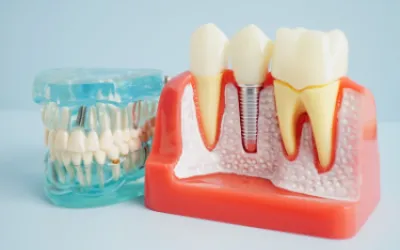
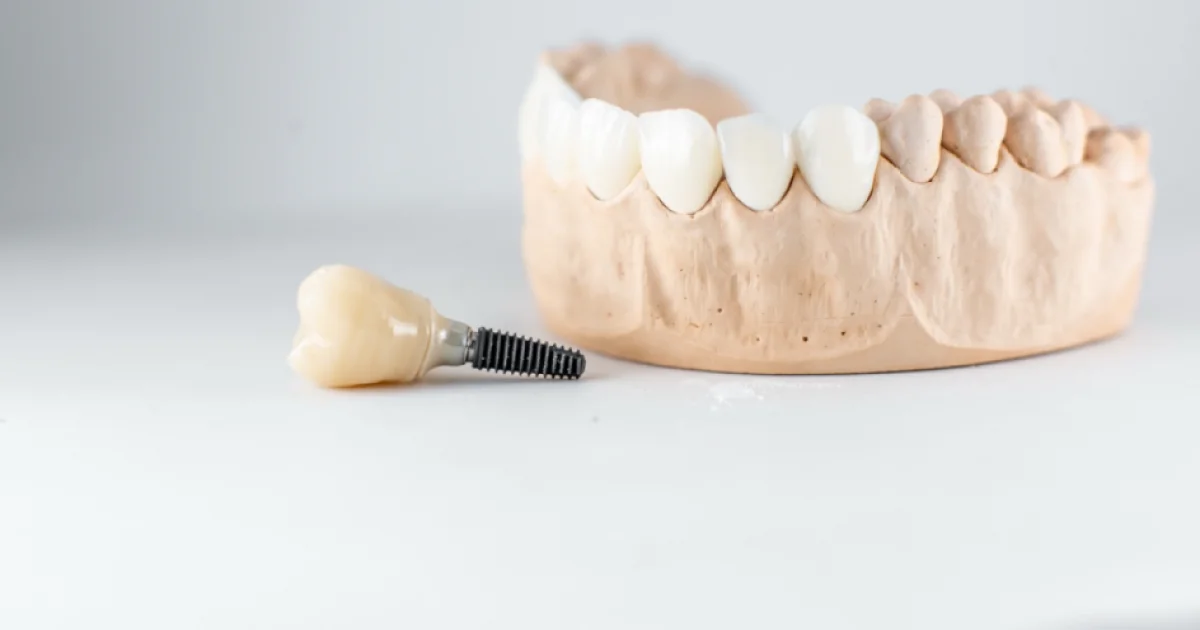
An implant is a medical grade titanium screw placed in the bone in the position of the lost root. Within a few months the bone grows around its surface, a process called osseointegration, and the implant becomes a stable base on which to screw an abutment and a crown, or a complete prosthesis in the case of full arch rehabilitations. Titanium is biocompatible and has been used in surgery for decades; modern implants have treated surfaces that speed up healing and precise internal connections that guarantee the stability of the prosthesis.
How does the implant journey begin?
With the free consultation with our implant surgeon, who speaks Italian and English, by video call or at the clinic. With a panoramic radiograph and, where available, a CT scan, the doctor assesses bone quantity and quality, the condition of the gums, the teeth to be extracted and any gum disease to treat first. Only at that point can solutions and costs be discussed. On your arrival in Tirana the cone beam CT scan is repeated or taken for the first time, and the plan is confirmed in detail.
Which solutions exist?
A single implant replaces a missing tooth without touching its neighbours: placement under local anaesthesia and a final zirconia crown after three to six months of osseointegration. All-on-4 and All-on-6 rehabilitations replace all the teeth of an arch with four or six implants and a fixed prosthesis: in many cases a fixed provisional prosthesis is delivered within twenty four to seventy two hours of surgery, and the final zirconia one during the second stay. The surgeon chooses between four and six implants according to the available bone and the chewing forces. The removable implant denture, called an overdenture, is the intermediate solution for those who prefer a prosthesis that comes out but stays stable thanks to two or four implants.
What happens if there is not enough bone?
A sinus lift increases the bone height in the back of the upper arch, and a bone graft rebuilds ridges that are too thin or too low. These are the variables that most change the timing and cost of an implant plan, and exactly why nobody can give you a serious price without examining you. When the remaining bone allows it, graft and implant are done in the same session; otherwise the graft needs a few months to mature before the implants are placed.
How is the surgery performed?
With the data from the CT scan and the intraoral scan the surgeon plans the ideal position of the implants on the computer and prepares a 3D printed surgical guide, which directs the drill into the established position, angle and depth. The procedure takes place under local anaesthesia, with sedation if you wish, in a dedicated surgical room and with European sterilisation protocols. We use exclusively internationally recognised implant brands, and the name of the system with the batch number is handed to the patient in the implant passport. The post operative period is followed by the doctor with instructions in your language and, after you return, by video call.
How long do healing and trips take?
The first stay in Tirana lasts five to seven days for extractions, implant placement and the provisional prosthesis. Three to six months of healing at home follow, with remote checkups. The second stay, of five to seven days, is for the digital impressions, the aesthetic fittings and the delivery of the final prosthesis. In cases with a lateral sinus lift or extensive grafts the journey may require one extra stay, and the surgeon says so from the consultation onwards.
Does it hurt and how long is recovery?
Under local anaesthesia the procedure is almost always painless. Over the following days moderate swelling and slight discomfort are normal, controlled with the prescribed medication. After one or two days of rest you return to normal life with a soft diet for a few weeks. Reducing or stopping smoking during healing significantly improves the result, and the doctor discusses this openly with every patient.
How is the cost decided?
The cost of an implant plan depends on the number of implants, the need for grafts or lifts, the type of prosthesis and any preliminary treatments. Our doctor communicates it after the consultation, in writing and item by item, and from then on it does not change. We do not publish price lists with prices starting from a certain figure, because that would be a way of attracting you with a number we would then have to revise in the chair. The saving compared with Italy is real and comes from the operating costs of the clinic, not from the materials or the doctor.
Who can receive an implant?
Most healthy adults. There is no upper age limit: what matters is the quality of the bone, the health of the gums and general condition. Well controlled diabetes, treated hypertension and advanced age are not contraindications. Therapy with anticoagulants and bisphosphonates, uncontrolled diabetes, recent radiotherapy in the facial area and heavy smoking do require precautions or a discussion with the treating doctor. Our surgeon talks about this openly during the free consultation and, if an implant is not safe for you, tells you so.
How long does an implant last?
With good hygiene, periodic checkups and no risk factors such as smoking and untreated bruxism, an implant can last a lifetime. The crown or prosthesis resting on it lasts longer if made in zirconia and can be replaced in the future without touching the implant. The written warranty we deliver with the treatment plan states duration and conditions, and the implant passport allows any dentist to work in the future with the correct components.
What warranty do you receive?
Implants and prosthetics are covered by a written warranty delivered together with the treatment plan, with clear conditions on periodic checkups. The surgeon who operated on you remains your point of contact even after you return home, reachable on WhatsApp and by video call, and maintenance checkups can be organised remotely or during later stays. If you want to know which implant solution suits your mouth, the consultation with our surgeon is free and without obligation.