Anyone who has lost all the teeth of an arch, or has remaining teeth that cannot be saved, can today return to fixed teeth with four or six implants. All-on-4 and All-on-6 are the two techniques most used in our Tirana clinics and the question we receive most often is which is better. The honest answer is that there is no best solution in absolute terms: there is the right one for your mouth, and the surgeon decides it on the CT scan. In this article we explain what changes between the two and how the choice is reached.
What do they have in common?
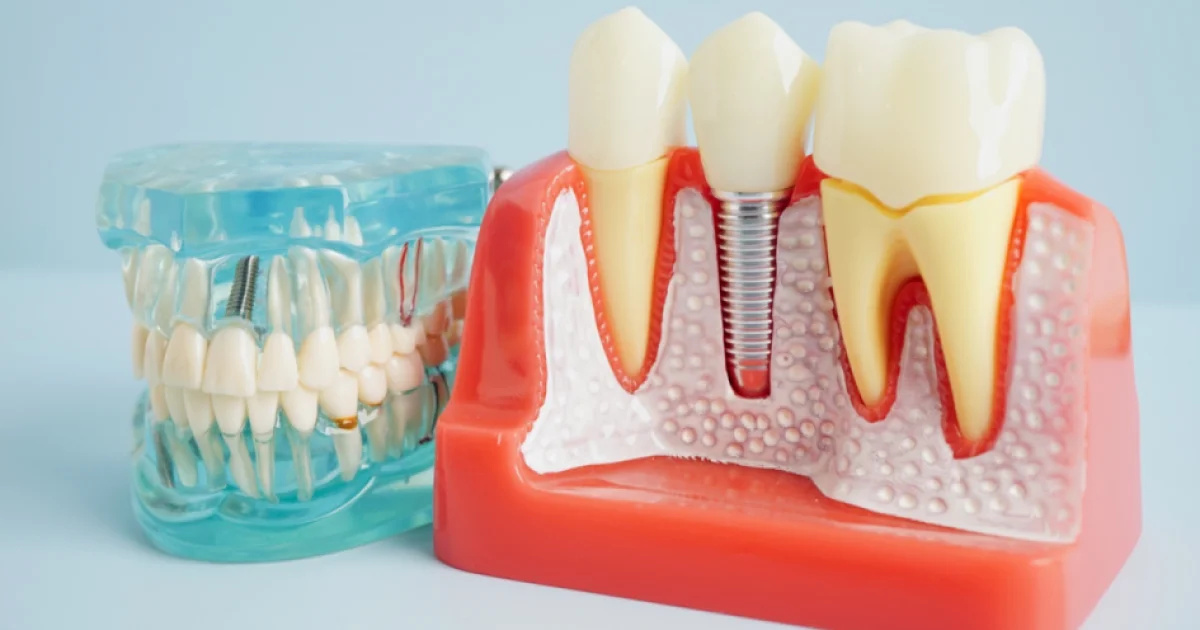
Both techniques replace all the teeth of an arch with a fixed prosthesis screwed onto implants, which the patient cannot remove and which behaves like natural teeth. Both allow, in most cases, a fixed provisional prosthesis to be delivered within twenty four to seventy two hours of surgery, so you go home with teeth. Both involve a final zirconia prosthesis made in the own laboratory after healing, and in both cases planning is done on the computer with guided surgery.
How does All-on-4 work?
Two implants are placed straight in the front area, where bone is almost always plentiful, and two are tilted in the back area to make the best use of the available bone and avoid the maxillary sinus or the alveolar nerve. This tilt provides a stable base even in patients who have lost bone volume, reducing the need for grafts. The prosthesis normally covers twelve teeth, up to the first molars.
How does All-on-6 work?
Six implants are spread along the arch, in positions planned to use the best bone. With six support points the chewing forces are distributed more evenly, the prosthesis can extend further back to the molars and the structure has a safety reserve should one implant ever need attention in the future. In exchange, more bone and a slightly longer procedure are needed.
When does the surgeon choose All-on-4?
When the back bone is reduced and a graft or sinus lift is to be avoided, when the patient chews normally, when a shorter procedure and simpler healing are wanted, and often for the lower arch, where the bone is denser and four implants offer excellent stability. It is also the most frequent choice for patients moving from a removable denture to fixed teeth and for those whose general condition suggests a more contained procedure.
When does the surgeon choose All-on-6?
When there is enough bone for six implants, for the upper arch where the bone is softer and a more distributed load is prudent, for younger patients who will use the prosthesis for many decades, for people with bruxism or very heavy chewing and for those who want a longer prosthesis with full chewing at the back. In some cases the upper arch is rehabilitated with six implants and the lower with four.
What does the CT scan show?
The cone beam CT scan, taken on your arrival in Tirana or sent from home, shows in three dimensions the height and thickness of the bone, its density, the position of the alveolar nerve and of the sinuses. On these images the surgeon virtually positions the implants and checks how many can be placed stably and where. It is the CT scan, not the price list, that decides between four and six implants, and this is why the cost of the treatment is communicated only after the consultation and the assessment of the images.
How long do timing and trips take?
For both techniques the journey involves two stays in Tirana. The first lasts about a week and includes the examination, any extractions, implant placement and the delivery of the fixed provisional prosthesis. After four to six months of healing, followed remotely by video call, the second stay of five to seven days is for the digital impressions, the aesthetic fittings and the delivery of the final zirconia prosthesis.
Which final prosthesis do you receive?
A full arch zirconia bridge, milled from a single block with CAD/CAM technology in the own laboratory and characterised by hand by the ceramist. Zirconia is strong, does not stain and has a translucency similar to natural enamel. The bridge is screwed onto the implants and can only be removed by the doctor for maintenance. We use internationally recognised implant brands and certified zirconia from German and Japanese manufacturers, stated in the treatment plan.
How are they maintained over time?
The prosthesis is cleaned every day with a toothbrush, interdental brushes and a water flosser, exactly like natural teeth, and is checked periodically by the doctor, by video call or during later stays. Once a year it can be unscrewed for a complete professional cleaning. People who grind their teeth receive a protective night guard. With good hygiene and regular checkups both rehabilitations last many years, and every treatment is covered by a written warranty.
What if an implant does not integrate?
It happens rarely, but it can happen, and it is one of the reasons why the two techniques have different safety margins. With six implants the prosthesis remains stable even if one has to be removed and replaced after healing. With four implants the surgeon assesses case by case, and generally places a new implant in a nearby position. In both cases the replacement is covered by the written warranty and is organised as quickly as possible, with the doctor following you remotely until you return to the clinic.
How does it differ from a removable denture on implants?
The overdenture, the denture that clips onto two or four implants and that the patient removes for cleaning, is a cheaper intermediate solution with a more contained procedure, but it does not offer the feeling of fixed teeth nor the same chewing ability. All-on-4 and All-on-6 are indicated for those who want to forget they have a prosthesis. The surgeon compares all the options with you during the free consultation, with their pros and cons in your specific case.
How is the decision made, in practice?
With the free consultation with our implant surgeon, who speaks Italian and English, by video call or at the clinic. The surgeon examines the panoramic radiograph and the photos, explains the two solutions with their pros and cons in your case and, after the CT scan, delivers the treatment plan and the cost in writing. The final decision is yours, made with all the information and without any pressure.