The most common concern of anyone considering treatment in Albania is quality. It is a fair concern, because in dental tourism very different realities coexist. In this article we compare, point by point, our Tirana clinics with a good Italian clinic, showing where the quality is the same, where it is organised differently and what you should check in both cases before entrusting your mouth to anyone.
Do the doctors have the same training?
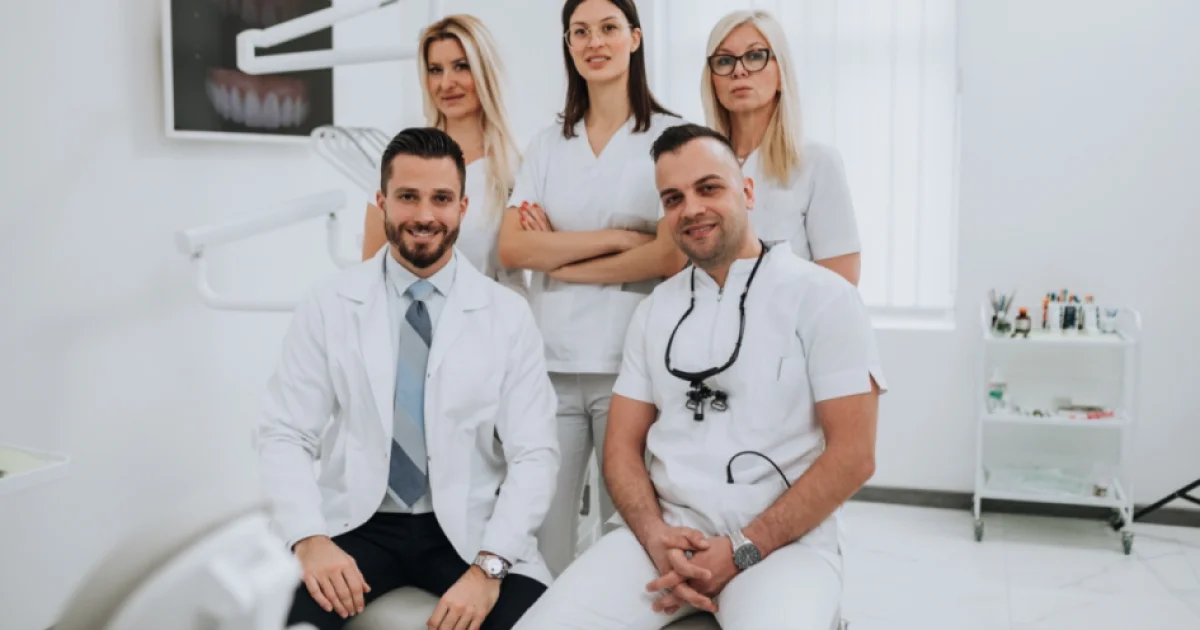
The doctors of our clinics studied and specialised abroad, mainly at European universities and centres, and attend continuous training courses in implantology, prosthetics, periodontology and aesthetics. In Italy a good dentist has the same kind of path: degree, specialisation or master's, congresses and courses. The difference lies not in the training but in the experience with complex cases: a clinic that performs full rehabilitations on implants every week accumulates a caseload that a general practice does not reach in years. In complex cases the treatment plan in our clinics is discussed by surgeon, prosthodontist and orthodontist, as happens in the best European centres.
Are the materials the same?
Yes. The implants we use are internationally recognised brands, the same ones a patient would find in the most careful Italian clinics, with the batch documentation handed to the patient. Zirconia, composites, ceramics, graft materials and membranes are CE certified and come from the same European, Japanese and American manufacturers. The dental materials market is global: a German or Japanese manufacturer sells the same product in Tirana and in Turin. What you should ask, in Italy as with us, is the name of the implant system and the type of zirconia, and insist that they are written in the treatment plan.
Is the technology comparable?
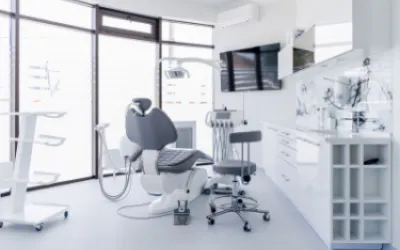
Our Tirana clinics work with cone beam CT, three dimensional intraoral scanners, guided implant surgery, CAD/CAM design, Digital Smile Design and zirconia milling machines in the own laboratory. The equipment comes from German, Italian, Japanese and American manufacturers, that is from the same suppliers as the most modern European clinics. Many good Italian practices have the same technology; many others, especially the smaller ones, send the work to external laboratories and radiology centres. Having everything under one roof is not only convenient: it reduces transmission errors between doctor and technician and makes it possible to complete the treatment in a single stay.
Are sterilisation and safety at the same level?
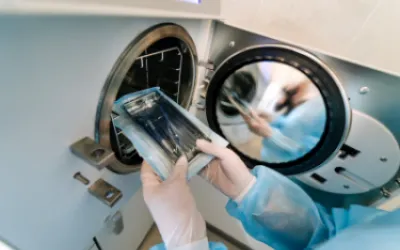
The sterilisation protocols of our clinics follow European guidelines: reusable instruments in the autoclave with documented cycles and periodic checks with biological and chemical indicators, single use material wherever possible, surgical rooms separate from restorative treatment rooms, traceability of implant and material batches. These are the same standards required in Italy, and a patient has the right to ask to see them applied in any clinic in the world. During your first day in Tirana we are happy to show you how the clinic works.
How is the result checked?
Quality is not only what goes into the mouth, it is also the control of what comes out of it. Every treatment in our clinics is documented with radiographs and photos before and after, the treatment plan is written and the warranty is delivered with the plan. After you return home the doctor who treated you remains reachable on WhatsApp and by video call, and periodic checkups are scheduled remotely or during later stays. A good Italian practice does the same; the difference is that we do it knowing that the patient lives a thousand kilometres away and organise everything accordingly.
What really changes compared with an Italian clinic?
Timing and organisation change. In Italy a prosthetic treatment develops over many sessions spread across weeks; in Tirana the same work is concentrated into a few days thanks to the own laboratory and a team working in parallel. The cost changes, for economic reasons we explain in another article and which have nothing to do with materials, doctors or safety. And the relationship changes: the person answering the phone works in the clinic, not in a call centre, and the free consultation is given by a doctor and not by a salesperson.
Where should you be careful?
In dental tourism the risk is not Albania itself, but the intermediary. Agencies that collect contacts online and sell them on to third party clinics have no control over quality and no responsibility for the result. The patient does not know which clinic they will end up in, who will treat them and with which materials. This is why we insist on one point: our whole team is part of the clinics, we have no sales agents and the treatment plan is decided by a doctor according to your clinical situation, not a commercial target.
How do you verify quality before leaving?
Have a consultation with the doctor who will treat you and judge how they explain things. Ask for the name of the implant systems, the type of zirconia and the origin of the equipment. Ask to see cases similar to yours, with radiographs before and after. Ask for the written warranty and what it covers. Ask who will answer you after you return. These are questions every serious clinic, in Italy or in Tirana, is happy to receive. Our answers are on this website and, above all, in the free consultation with our doctor.
What do patients who compared both experiences say?
Many of our patients were treated for years at home and arrive in Tirana with a quote from their own country in hand. What they notice first is not the price but the method: a CT scan and a scan on the first day, a written treatment plan before starting, the doctor explaining every step in their language and a laboratory a few metres from the chair. What they notice later, back home, is that their trusted dentist recognises the work as well done, because the materials and techniques are the ones they know.
Does quality also show in the cases we turn down?
Yes. A serious clinic says no when a treatment is not indicated: implants in a patient with untreated gum disease, veneers on grinding teeth without protection, full rehabilitations in general conditions that advise against surgery. In these cases our doctor first proposes the necessary care or advises against going ahead, even if it means losing a patient. It is the difference between those who work inside the clinics and those who earn a commission on every booking.
Why do we never speak badly of Italian clinics?
Because we have no reason to. Italian dentistry is of excellent quality and many of our doctors trained in Italy. Our aim is not to convince anyone that Tirana works better, but to show that it works with the same quality, the same materials and the same technology, in a context that allows lower costs and shorter times. The final choice belongs to the patient, and our part is to give them all the information to make it with peace of mind.