The question we receive most often is why dental care in Tirana costs less than in Italy or the rest of Western Europe. The doubt behind it is legitimate: if it costs less, where is the saving hidden? In the materials, in the doctors, in safety? The answer is that the saving lies in none of these three. It lies in the cost structure of a clinic in Albania, which is very different from that of an Italian practice, and in a way of working organised around the patient who arrives from abroad. In this article we explain the economic reasons one by one, without advertising figures, because the cost of your treatment will be given to you by the doctor after the free consultation and not by an article.
What makes up the price of a dental treatment?
When you pay for an implant or a crown in any country, you are paying for four things: the material, meaning the implant, the abutment, the zirconia; the work of the dental laboratory; the time of the doctor and the team; and the general costs of the practice, meaning rent, utilities, administrative staff, taxes, insurance and depreciation of the equipment. Materials and equipment are bought on the international market at the same price, or nearly, all over Europe. What changes radically between Tirana and Milan or Rome are the other three items.
How much do rent and general costs weigh?
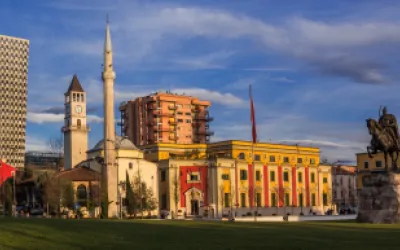
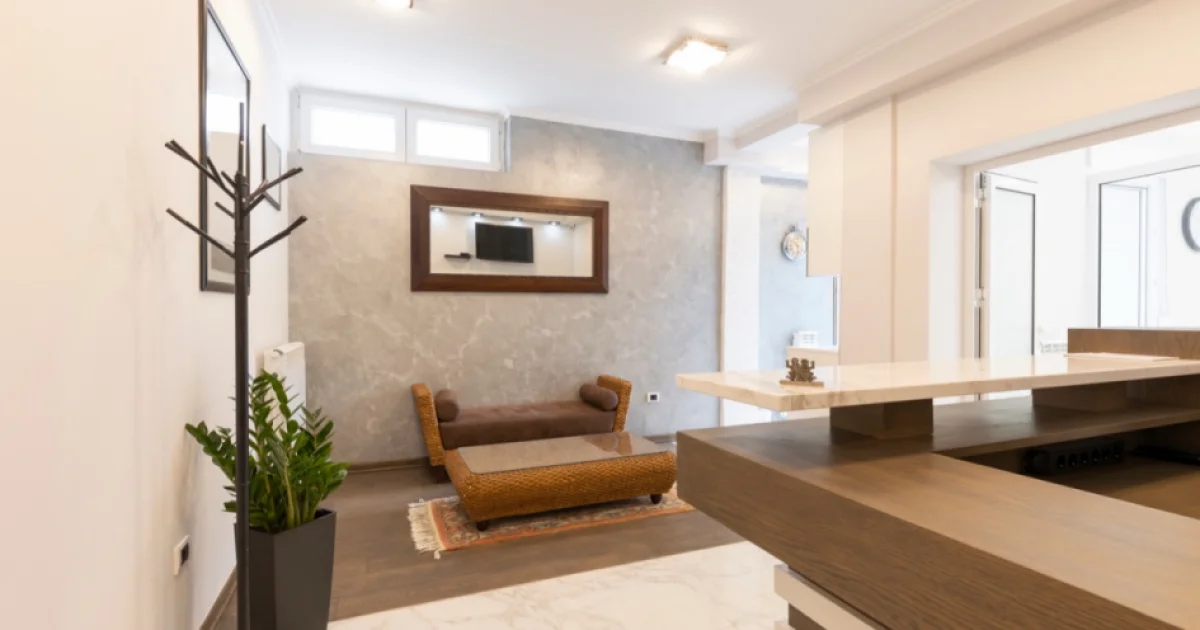
A three hundred square metre dental practice in a central area of Tirana costs a fraction of what it would cost in a medium sized Italian city. The same applies to utilities, insurance and administrative charges. These general costs are spread over every treatment performed: when they are lower, every single treatment costs less without the doctor or the material being any different. It is the same reason why an identical meal costs less in a provincial town than in the centre of a capital.
How do salaries affect the price?
The cost of living in Albania is lower than in Italy and so are the salaries of assistants, hygienists, dental technicians and administrative staff. The doctors of our clinics are well paid by local standards and are professionals trained in Europe, but the overall cost of the team working around each patient is still lower. Laboratory work, which in Italy represents a large share of the price of crowns, bridges and dentures, also costs less because the laboratory is inside the clinic and the technicians work side by side with the doctor.
Why does the own laboratory make a difference?
In our Tirana clinics zirconia prosthetics, veneers, bridges and provisional dentures are designed and milled in the own laboratory with CAD/CAM technology. This removes the costs and shipping times of external laboratories, allows corrections on the same day and makes it possible to complete in a single stay work that elsewhere would take weeks. Fewer steps mean lower costs and fewer errors, and for the patient arriving from abroad they mean a shorter and more predictable stay.
What role does the volume of work play?
A clinic that performs many full rehabilitations, implants and prosthetics every week organises its work differently from a practice that does a few a month. It buys materials in larger quantities on better terms, depreciates the CT scanner, the scanners and the milling machines over a higher number of cases and develops standardised protocols that reduce chair time. The experience accumulated by the surgeons on complex cases is also a guarantee of quality, not only of efficiency.
Where is there no saving?
Not on the implants, which are internationally recognised brands, the same ones used in the best European clinics. Not on zirconia, composites, graft materials and membranes, all CE certified and coming from the same European, Japanese and American manufacturers. Not on the equipment: cone beam CT scanners, intraoral scanners, milling machines and autoclaves come from German, Italian, Japanese and American producers. Not on sterilisation, which follows European protocols with documented cycles. And not on the doctors, who studied and specialised in Europe. Saving on these points would be a mistake paid for by the patient, and we work inside the clinics: every problem would come back to us.
Why don't we publish saving percentages?
A saving percentage only makes sense when comparing two identical treatment plans, drawn up by two doctors who examined the same patient. Without an examination there is no treatment plan and therefore no honest comparison. The percentages you read online compare price lists, not patients, and their purpose is to attract contacts. We prefer a different path: a free consultation with a doctor, a treatment plan and cost in writing, and then a calm comparison with the quote you have at home, item by item, with the same materials and the same warranties on the table.
How do you seriously compare a home quote with ours?
Check that both were drawn up by a doctor after seeing your radiographs and that they list every item: extractions, grafts, provisionals, final prosthesis, checkups. Ask for the implant brand and the type of zirconia. Ask which written warranty you receive and what it covers. Add to the cost of the treatment in Tirana the flight, the hotel and the days of stay, which we indicate in advance. Only then is the comparison real, and in the great majority of cases, for treatments of medium and high complexity, the saving remains substantial even after counting the trip.
Does a lower cost mean longer times or rushed care?
No, if anything the opposite. The own laboratory and a team working in parallel make it possible to concentrate into a few days a treatment that at home develops over many sessions spread across weeks. Chair time for each single stage is the same, because clinical protocols do not change: an implant needs the same months of osseointegration in Tirana and in Milan, and a crown requires the same fittings. What is shortened is the waiting between stages, not the care itself.
How much does the trip weigh on the overall saving?
Direct flight, hotel and transfers have a cost we indicate before departure and which, for treatments of medium and high complexity, remains far lower than the difference between the two quotes. For a hygiene session or a single filling the trip is not worthwhile, and we tell you so openly during the free consultation. Our interest is that the patient travels only when it makes sense, because every patient who returns satisfied is worth more than any advertising campaign.
Is the saving the right reason to travel?
The saving is a consequence, not the reason. The reason to be treated in our Tirana clinics is the quality of the journey: a doctor who examines you free of charge and speaks your language, a clear treatment plan, first class materials and technology, a laboratory working next to the doctor and support that continues after you return home. If you want to understand what your mouth really needs and what it would cost, the first step is a free consultation with our doctor, online or at the clinic.